


A rather dramatic storm occurred in the early afternoon of July 9th, 1850, in the land of the Lion and the Sun. Although there are no meteorological records to confirm the fact, independent historical accounts agree that this storm swept across the length and breadth of Persia. In the north, a gale of exceptional severity accompanied by a whirlwind of dust clouded the city of Tabriz. In the south, the storm ripped tent poles out of their sockets and scattered servants down the hillside where Lady Mary Sheil, with her husband and her infants, had taken refuge from the scorching summer heat of the capital, Tehran. She was so frightened that she described the experience in Glimpses of Life and Manners in Persia, her memoirs published by John Murray six years later. In her entry for July 1850, she writes:
One afternoon a storm came on, accompanied by such a deluge of rain as I never before had seen. In a few minutes the tent was filled with water, and the air became nearly dark. Suddenly a rumbling and very appalling sound was heard; it increased, it approached, it roared, and shouts and yells went forth the whole length of the valley. We rushed in terror out of the tent into the drenching rain; I, at least, ignorant of the nature of the convulsion. Down it came, bellowing and pealing like the loudest thunder. … We groped about in the dark, not knowing where to go, or from what quarter the danger had come.
Her records make no mention of the mysterious episode that heralded this freak storm, in the northern capital of Tabriz. Her husband’s official dispatches to Lord Palmerston naturally refer to it, but as wife of Britain’s Envoy Plenipotentiary, Lady Mary avoided controversial subjects. And this was definitely one of them. That same day, just hours before the unprecedented tempest swept through the land, a young Siyyid from Shiraz, claiming to be the return of the Promised Qa’im and condemned to death for heresy by the mullahs, was trussed up on ropes and hung on a nail on the wall of the barracks. I will not dwell on what occurred next. Those who know, need no repetition; those who do not, may rightly feel this digression has already gone on for too long. But I can assure you, that although they soon forgot it, many present at the time believed they witnessed a miracle that day. The rest of us, if we prefer, may assume it was an atmospheric accident. Suffice it to say that in the aftermath of this strange occurrence, with all the inhabitants of Tabriz amassed on nearby roof tops to see the Siyyid-i-Bab, shot at close range for claiming that a new age was destined to replace the old, the light of the sun was blotted out, the day turned to night, and the land was plunged into Biblical darkness for several hours.
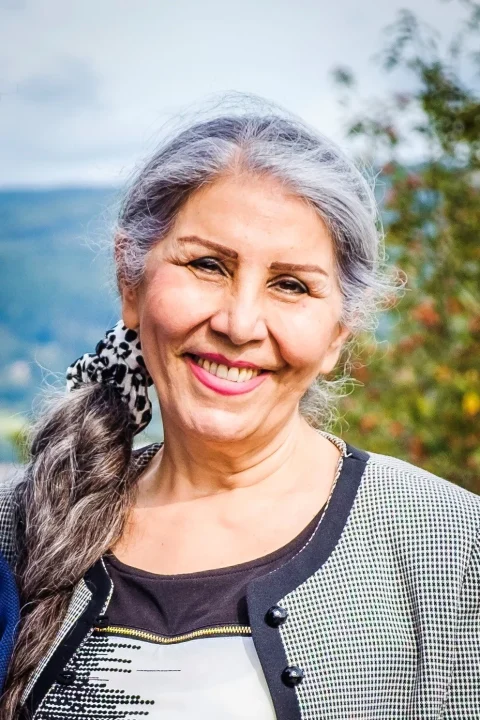
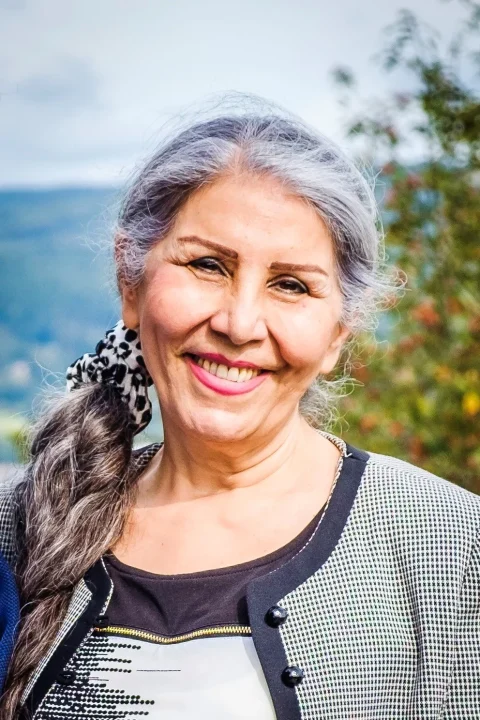
More than a century and a half later, in 2026, at a time when, if the news is anything to go by, we seem to be plunged in Biblical darkness once more, a book has been launched on this very same day: July 9th. Although it can hardly be blamed for the political atmospherics of our times, Open Wide the Doors, published by Oneworld in the UK, is also a memoir, but not of the wife of an ambassador. It was written by a prisoner, an ordinary Iranian woman abducted in Mashhad and kept in solitary confinement for believing that a new age was indeed destined to replace the old. A strange coincidence. Is it not a chilling thought that one hundred and seventy-six years after the precursor of the Baha’i Faith was shot, those in Iran who believe in the Bab’s message today are still in danger of being convicted for apostasy and trumped-up allegations of espionage? Mahvash Sabet is one of them, one of the Yaran, the seven prominent Baha’is arrested in 2008 and condemned to twenty-year sentence in 2010 for their faith. She dared to write about it, dared to scribble her memoirs in prison, and by a small, serendipitous miracle her book has just been launched when millions of Baha’is the world over remember the Bab.
TThis is not, Mahvash would insist, because she is in any way special. She is just an ordinary woman, a wife and a mother, who was a teacher and school principal before losing her job in 1979, when the Islamic Republic came into power. Nor, she would assure you, is she the only Iranian since then who has recorded the horrors of incarceration and torture. Prison memoirs, unfortunately, abound. The publisher of Mahvash’s book has already brought out six of them to date, but there has to be a hook, apart from the catalogue of misery, for them to sell. For example, the most famous to be released this year is by the Nobel prize winner, Narges Mohammadi. Another, the prison correspondence of an equally well-known human rights lawyer, Nasrin Sotoudeh is also eagerly anticipated. All these brave women shared time together in the infamous Section 209 of the prison of Evin; they all encouraged each other to write about what was happening to them. And other women, equally brave and sharing their cells, helped to smuggle these precious notes, scribbled surreptitiously in margins of books and scraps of paper, out of the prison to safety. The publication of any one of these memoirs by women in the prisons of Iran is frankly a vindication and a victory for them all.
But despite this Pyrrhic victory, and the dangerous conditions risked in their writing, the blood and sweat expended in sharing their words with the world, I have been reliably informed, by those in the know, that prison memoirs, even of the internationally famous, suffer relatively short lives and poor sales. Such precipitous mortality is not only due to the perilous state of contemporary publishing either: it is, according to my knowledgeable informant, the fault of the authors. Those who remain in Iran obviously cannot undertake book tours and sign copies, participate on talk shows and have interviews. In other words, they fail to become the necessary commodity to market their books. This failure is especially true in the case of Mahvash. She has chosen to remain in Iran because she is a Baha’i. Despite loss of home, economic collapse, imminent drought and never-ending war, she is still in Iran, at the risk of her life. And her book is dedicated to the people of Iran.
If her story is remembered, therefore, it must be for some other reason that its being a prison memoir. We have become numbed, alas, even before the body bags, to such heartbreaking reports from Iran. The psychological and emotional effects of white torture are well known. Hours of relentless interrogation followed by ruthless beatings, physical torment, and rape are just a few of the crimes recorded by political prisoners held by the IRGC. The cramped conditions, the egregious lack of sanitation and food, the gang warfare incited by guards to keep the inmates in a state of permanent terror, particularly in the provincial prisons, have been repeatedly documented. So what does Mahvash Sabet have to offer us that is different? Is there nothing but its publication date that distinguishes this book?
I must assure you, that despite the historic events associated with it, this is not a Baha’i book per se. Mahvash did not publish her memoirs to tell the Baha’is what they already know. Nor did she wish to write a book that could be seen as “propaganda” by her dear compatriots, wary as they naturally are, after forty-seven years under a theocratic regime, of anything smacking of religious-seeming hype. Although her every word shines with the light of her Faith and is influenced by the teachings of its founder, Baha’u’llah, she is not trying to convince or to convert. Her memoirs are simply a record of what happened to her and what she learned; she is sharing this story because she knows it to be a common one, experienced by others, lived by many. Her book is intended to touch hearts, to reach readers from all backgrounds and all cultures. It is an everywoman’s story.
That said, it does have a special resonance for Baha’is. I would hazard that few Baha’i records exist, written by individuals experiencing conditions of equal stress and isolation, that explore so honestly the accusations of those who attack this Faith, and express so beautifully how to defend it. Perhaps the only comparison might be found in the letters of Keith Ransome Kehler, written the early 1930’s to the Guardian of the Baha’i Faith, describing her failed attempts to appeal for the emancipation the Iranian Baha’is from the persecutions being inflicted on them under the Pahlavi regime. But most of us, when we are attacked for our beliefs, or try to defend them, do not attempt to write about the experience. Perhaps this is because we now have access, through sites like the Archives of Baha’i Persecution in Iran, to the carefully compiled documents which demonstrate far better than we can ourselves, the falsehoods and distortions levelled against our community over the past century. Perhaps it is also because we have an equal number of clear and eloquent statements prepared by the Baha’i International Community and other institutions of our Faith, which lay out carefully and systematically the ground on which such accusations are baseless and where they distort the truth.
But in 2008, in the grey walled Detention Centre of the Ministry of Intelligence in Mashhad, and later in the padded interrogation rooms in Section 209 of Evin Prison in Tehran, Mahvash did not have recourse to such advocacy. She was alone and at the mercy of an unseen interrogator who prowled up and down behind her, breathing heavily. There she sat, day after day, blindfold on a chair, with her face to the wall with this man throwing insults at her back. There she sat, enduring foul-mouthed attacks against her beliefs for up to seventeen hours at a stretch, as he hurled questions at her. And for almost six months, she had to reply to this unseen man. Summoning every shred of courage and mental acuity in her possession, she had to answer him, clearly, cogently, and courteously.
Her memoirs are a record of these questions and the history of her answers. They are literally the anatomy of a defence: the defence of her Faith, which as the story unfolds, it becomes evident is the defence of everyone’s faith – faith in our freedom, faith in our future, and faith in humanity itself. The questions she is asked reflect the many misconceptions held by officials of the Islamic Republic about the Baha’i community, the many accusations they level against it based on fear, suspicion and paranoia. They illustrate the wilful distortion of facts, the determined misrepresentation of history used to denounce the Baha’is as political operatives, fifth columnists, spies. And as Mahvash attempts to qualify these allegations, correct these falsifications, we begin to understand that she is defending us all against everything that undermines hope and denies truth, everything that is negative, cynical, and corrosive of trust. She re-interprets words, widens definitions. When her interrogator takes concepts out of context and pits opinions against facts, she emphasizes underlying principles to broaden the discussion. When his questions provoke doubt and try to incite division, she offers answers that are conciliatory and inclusive. He insists on contradictions; she highlights complementarities. To each of the allegations he throws at her, Mahvash responds calmly; to each charge she answers with admirable restraint. Only in one instance, when he finally curses the very core of her beliefs and denigrates the central covenant of her existence, does she react with outrage and raise her voice. That is the spiritual climax of this story.
What emerges from these gruelling interrogations is not only a study of quiet resilience and shining integrity, but also a portrait of leonine courage. This is because Mahvash does the interrogating too. Not overtly of course, but in the freedom of her mind. She questions the injustice and corruption of the legal system which holds her and so many others in hostage; she questions the inhumanity of the prison administration which punishes innocence and encourages corruption; she questions the sheer waste of human potential in these fetid, suffocating cells, and the cruelty that is sowing dragons seeds of trauma in a population for generations to come. Above all she identifies the ways in which the current regime has not only sought to strangle and crush the Iranian Baha’i community but has deliberately tried to punish the Baha’is for seeking ways to alleviate its own and other peoples’ suffering. And after she is finally permitted to leave the lowering presence of her belligerent interrogator, and to escape his acrid breath, his harsh, demeaning language, Mahvash continues to interrogate herself through the sleepless hours. All through the night, in the dimness of her cell which is never wholly dark and never light enough to read, she questions her reactions, agonizes over her motives, and reprimands herself for lacking wisdom. Her anguish is so familiar, her vulnerability so immediate, that as a reader you find yourself sharing the cold floor with her.
But she offers answers to us too. And her replies marvellously affirm her humanity, her compassion for her fellow prisoners, her scrupulous honesty. Indeed, her real response to the vindicative questions posed by the interrogator are illustrated by Mahvash’s deeds and not just her words, by her extraordinary empathy, her seemingly bottomless reservoir of love for those she befriends in the prison. Her ultimate answer to all the indignities heaped on her head is her ability to hold it even higher, to find freedom in captivity and hope in despair. Her irony is delightfully wry too and very Persian; her sense of humour and self-mockery saves her from sentimentality. And she wins the argument in this contest of wills, by simply being herself. Her memoir is a remarkable testimony to the power of truth.
That is perhaps why, in the last analysis, this book is so much more than a prison memoir, and why it seems so relevant to our times. We are in dire need of the truth. We need to distinguish it from falsehood, identify the difference between fact and fiction, reality and illusion. Like Lady Mary Sheil, we are groping in the dark – “not knowing where to go, or from what quarter the danger had come.” The freak storm that swept the wife of the British ambassador and her children down the hillside in a deluge of rain to the rocky ravine below has been gathering range and momentum since 1850. Its violence has been increasing year by year. Its course has become ever more unpredictable, its immediate effects increasingly catatrophic. “Humanity, gripped in the clutches of its devastating power, is smitten by the evidences of its resistless fury.” And today, like Lady Mary in 1850, we too “can neither perceive its origin, nor probe its significance, nor discern its outcome.”
At such time as this, when doubt has paralysed our faculties and we have lost all sight of certainty, at such a time when the roar and ravage in the world dims every distinction between right and wrong, and a mighty wind seems indeed to be “invading the remotest and fairest regions of the earth, rocking its foundations, deranging its equilibrium, sundering its nations, disrupting the homes of its peoples…1” we need more than ever to read books like this one, by Mahvash Sabet.
Open Wide the Doors is like a bright light, a beacon in the dark; it is the story of a very free soul in the prisons of Iran who is defending our right to believe in hope, to have faith in the future, and to live for and love the truth.
B. Nakhjavani
France
Open Wide the Doors is out now on Amazon, get your copy here.

Source link