


Belief consists in accepting the affirmations of the soul; unbelief, in denying them. – Ralph Waldo Emerson
Life is real! Life is earnest!
And the grave is not its goal;
Dust thou are, to dust thou returnest,
Was not spoken of the soul.
― Henry Wadsworth LongfellowMan has no Body distinct from his soul; for that called Body is a portion of a Soul discerned by the five senses, the chief inlets of Soul in this age. – William Blake
What’s the most ancient, most persistent, and most profound human belief? It’s the existence of an immortal soul.
Most of the great poets and philosophers believed deeply in the human soul. Do you?
If you do, you’re in good company. Many anthropologists theorize that the idea of the soul dates back more than 200,000 years, right about the same time they believe human consciousness began to emerge. As soon as we had language, they think, humans began putting the concept of a soul into words.
At that point in early human history, our race experienced a cultural explosion, expressed in art, clothing, language and the beginnings of religion. We painted caves, ornamented ourselves with symbols, decorated our tombs with religious figures and representations and clearly began to think in an abstract way. At that point in our development, we had moved beyond the necessities of food and shelter, and had begun to utilize our leisure time, our creative impulses and our untapped brain power to transcend the merely physical and begin contemplating the spiritual.
But how did we first develop the idea of an immortal soul, or any kind of human spirituality?
It probably started with the mystery of death.
Unlike any animal, human beings have the capacity to project their minds forward into the future and contemplate their own demise. Once we knew we could die, scientists have theorized, we began to understand and believe that some innate part of us lived on. That immortal spirit or soul, exemplified in early cave art and symbolic tomb carvings, naturally emerged from our own discovery of consciousness and self-awareness.
Maybe that explains why every culture, even today, has some concept of a soul or spirit that outlives the body. No matter where they come from, humans seem compelled to think of themselves as something more than the sum of our biological parts.
Contemporary polls show that between 65-80% of the world’s people say they believe in the existence of the soul. Regardless of religion or the lack of it, the overwhelming majority of us accept that something spiritual, some innate inner essence we all possess, both animates us while our bodies live, and lives on after our bodies die.
The Baha’i Faith, like all of the other great global religions, definitely shares that belief:
While the body changes from one condition to another, there is no change or transformation for the soul. For example, the youthful form of the human body will become old, but the soul, remains the same; the body becomes weak, but the soul does not become weak; the body becomes defective or paralyzed, but for the soul, there is no change. How often a member may be amputated from a body, but the soul remains the same, and never changes. Therefore, while the body undergoes changes, the soul does not change. And because the soul does not change, it is immortal. For the pivot or the main thing in mortality is change and transformation.
In the world of dreams, the human body lays helpless; its powers lacking; the eyes do not see; the ears do not hear, and the body does not move. But the soul sees, hears, travels and solves problems. Therefore, it becomes evident, that by the death of the body, the soul does not die; in the passing away of the body, the soul does not perish; when the body sleeps, the soul does not sleep, nay, rather, it comprehends and discovers things; it flys and travels.
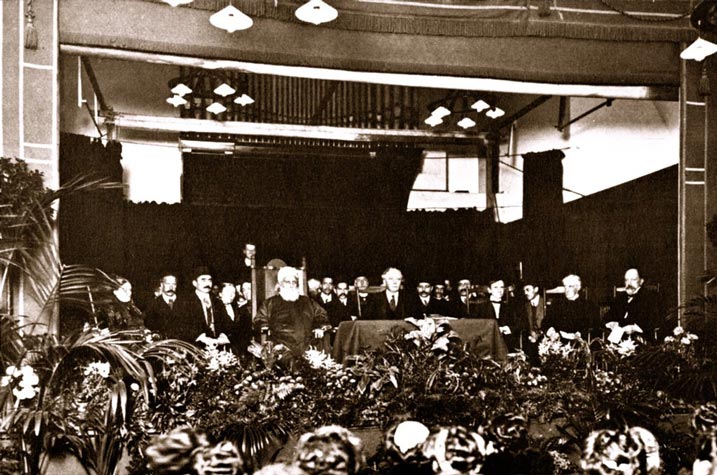
The body may be here, but the soul can be present in the east or west. While in the west, it manages the affairs of the east, and, in the east, it discovers the things of the west. It organizes and runs the vital affairs of nations. While the body is in one place, the soul travels in different countries and continents. In Spain, yet, it discovers America. Thus, the power and influence, which belong to the soul, are lacking in the body. The body does not see, but the soul sees and explores. Therefore, its life does not depend upon the body. – Abdu’l-Baha, Star of the West, Volume 9, pp. 307-308.
In this short series of essays, we’ll explore the concept of the soul, and ask the questions everyone asks themselves about their inner spirit: How do I prove it exists? Where is it? What does it mean for my life here in this physical universe? What does it mean for my life after I die?
Next: How Our Premonitions Prove We Have Souls

Source link