



Breadcrumb Trail Links
“There was a consistent reporting of better mental-health assessments” in Quebec than the rest of Canada, Jack Jedwab says.
Author of the article:
• Montreal Gazette
Published May 29, 2023 • 4 minute read
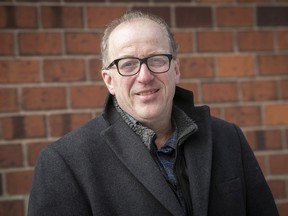 Jack Jedwab, seen in a file photo, was lead author of the study on Canadians’ mental health during the COVID-19 pandemic. Photo by Pierre Obendrauf /Montreal Gazette
Article content
Quebec’s pandemic lockdowns and its months-long curfews — largely panned by most of the public — did not harm Quebecers’ mental health as feared, a comprehensive new study suggests.
Advertisement 2
This advertisement has not loaded yet, but your article continues below.
THIS CONTENT IS RESERVED FOR SUBSCRIBERS ONLY
Subscribe now to read the latest news in your city and across Canada.
- Unlimited online access to articles from across Canada with one account.
- Get exclusive access to the Montreal Gazette ePaper, an electronic replica of the print edition that you can share, download and comment on.
- Enjoy insights and behind-the-scenes analysis from our award-winning journalists.
- Support local journalists and the next generation of journalists.
- Daily puzzles including the New York Times Crossword.
SUBSCRIBE TO UNLOCK MORE ARTICLES
Subscribe now to read the latest news in your city and across Canada.
- Unlimited online access to articles from across Canada with one account.
- Get exclusive access to the Montreal Gazette ePaper, an electronic replica of the print edition that you can share, download and comment on.
- Enjoy insights and behind-the-scenes analysis from our award-winning journalists.
- Support local journalists and the next generation of journalists.
- Daily puzzles including the New York Times Crossword.
REGISTER TO UNLOCK MORE ARTICLES
Create an account or sign in to continue with your reading experience.
- Access articles from across Canada with one account.
- Share your thoughts and join the conversation in the comments.
- Enjoy additional articles per month.
- Get email updates from your favourite authors.
Article content
In fact, Quebecers’ mental-health self-assessment scored higher than people in other provinces across the country, according to a Léger Marketing survey commissioned by the Association for Canadian Studies and the Metropolis Institute.

By clicking on the sign up button you consent to receive the above newsletter from Postmedia Network Inc. You may unsubscribe any time by clicking on the unsubscribe link at the bottom of our emails or any newsletter. Postmedia Network Inc. | 365 Bloor Street East, Toronto, Ontario, M4W 3L4 | 416-383-2300
Thanks for signing up!
Article content
The survey found that 78 per cent of Quebecers rated their mental health as either good or very good since the beginning of the COVID-19 crisis. That compared with 50 per cent of Ontario and British Columbia respondents feeling this way. And in Alberta, which had imposed the least stringent public-health protections, just 48 per cent of respondents had a positive mental-health self-assessment.
 Source: Association for Canadian Studies Photo by Association for Canadian Studies
“One would think that because of what was being described as conditions that contribute to greater stress and mental-health problems — those lockdowns, curfews (only in Quebec) and so forth that diminished interactions socially — that they would contribute to poorer outcomes with respect to mental health,” Jack Jedwab, lead author of the study, told the Montreal Gazette.
Article content
Advertisement 3
This advertisement has not loaded yet, but your article continues below.
Article content
“But in the case of Quebec, it didn’t seem to change the pattern at all for almost the entire period. There was a consistent reporting of better mental-health assessments.”
The findings would appear to bolster the case for public-health protections and challenge the rhetoric of the so-called Freedom Convoy protesters, who laid siege to much of Ottawa in January and February of 2022 to pressure governments into lifting mitigation measures. The study also suggests that consistent messaging by authorities emphasizing social solidarity is important in maintaining mental health during a crisis.
Jedwab and his fellow researchers commissioned multiple surveys on Canadians’ assessment of their mental health since March 2021. The latest web-based survey of 1,843 Canadians (including an oversampling of Quebecers) was carried out from Feb. 20 to March 3.
Advertisement 4
This advertisement has not loaded yet, but your article continues below.
Article content
For the most recent survey, Jedwab drilled down deeper into Quebec to determine whether there was a difference in mental-health self-assessments by anglophones versus francophones. Statistically, he found none. Just 5.3 per cent of francophone respondents rated their mental health as bad or very bad compared with 5.2 per cent of anglophones.
 Source: Association for Canadian Studies
“What we discovered when we did the oversampling was that anglophones were showing roughly similar self-assessments of their mental health to francophones in Quebec,” Jedwab explained. “So in other words, it’s more of a Quebec thing than a Quebec versus Canada distinction in terms of those self-assessed positive mental-health outcomes.
“It then sort of begs the question as to why Quebecers over that entire period — regardless of their language background — assessed their mental health more positively than other Canadians,” Jedwab added.
Advertisement 5
This advertisement has not loaded yet, but your article continues below.
Article content
“That might have to do with … political messaging as well as from influencers, where Quebecers were being told ‘ça va bien aller,’ it’s all going to be OK, or ‘we’re all in this together.’ This was a common message (across Canada), but perhaps to some extent those comfort-giving signals were stronger in Quebec with respect to the impact that they may or may not have had on mental-health outcomes.”
Indeed, Premier François Legault’s decision to impose two lengthy curfews — the sole jurisdiction in North America to do so — did not hurt him politically, as his Coalition Avenir Québec government was re-elected to a bigger majority in the provincial election last Oct. 3.
Another key finding in the study points to the resilience of Canadians when it comes to their mental health. Canadians’ negative self-assessments of their psychological health fell from 17.4 per cent in March 2021 to 13 per cent last March. In contrast, self-assessments of excellent or very good mental health rose from a combined 38 per cent in March 2021 to 45.7 per cent last March.
Advertisement 6
This advertisement has not loaded yet, but your article continues below.
Article content
 Source: Association for Canadian Studies
Still, the study did contain a disturbing finding: of those respondents across Canada who assessed their mental health as very bad, only 22.2 per cent actually received a diagnosis of depression from a medical professional. This would suggest that access to psychological services may be lacking across the country. In Quebec, nearly 21,000 people are waiting for such services, according to the Health Ministry.
“Without questioning the accuracy of (a) self-assessment — it doesn’t imply a depression diagnosis — (this finding) raises the possibility of many people falling through the cracks and not getting a medical assessment if needed,” Jedwab said.
Among other findings, one in five Canadians reported they received a depression diagnosis at one point in their lives. In Quebec, 22.3 per cent of francophones indicated they had depression, compared with 17.9 per cent of anglophones. Although Jedwab did not explicitly state this, the difference may be because anglophones in Quebec are having a harder time than francophones in gaining access to psychological services.
What’s more, students and unemployed persons across Canada “were far more inclined to see a rise in mental-health problems since the outset of the pandemic,” the study observed.
aderfel@postmedia.com
twitter.com/Aaron_Derfel
-

Bilingual Canadians more likely to value linguistic duality
-

Quebecers are uneasy about Islam, not religions in general, poll finds
Share this article in your social network
Comments
Postmedia is committed to maintaining a lively but civil forum for discussion and encourage all readers to share their views on our articles. Comments may take up to an hour for moderation before appearing on the site. We ask you to keep your comments relevant and respectful. We have enabled email notifications—you will now receive an email if you receive a reply to your comment, there is an update to a comment thread you follow or if a user you follow comments. Visit our Community Guidelines for more information and details on how to adjust your email settings.
Join the Conversation
Advertisement 1
This advertisement has not loaded yet, but your article continues below.