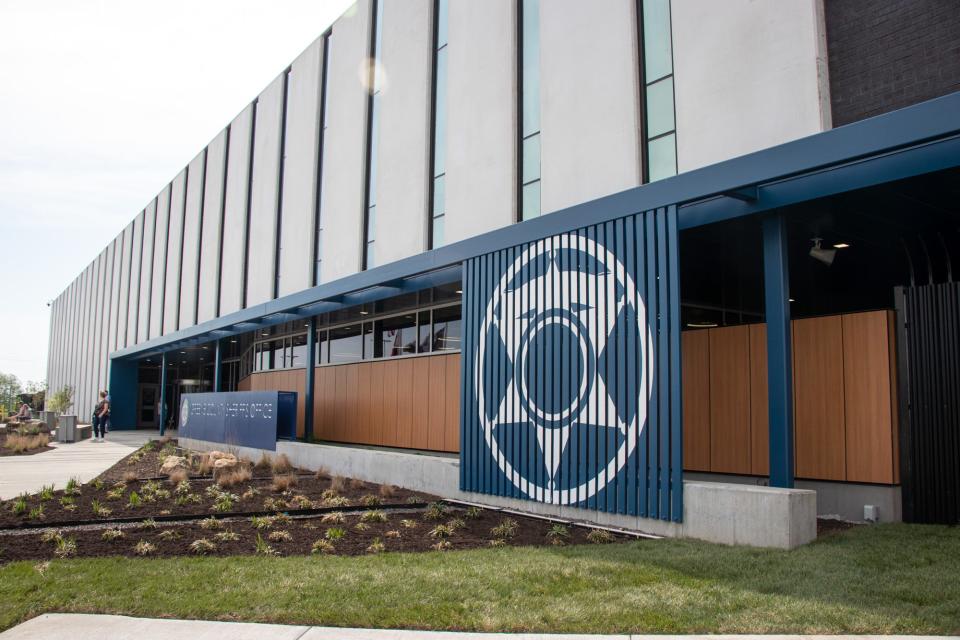


Collier County’s long planned mental health center to address need and population growth will have 87 beds with a construction price of $44 million.
The Collier County Commission unanimously voted Tuesday to move forward with a recommendation from staff for a 60,000-square foot building.
The site is the previously approved five acres adjacent to the David Lawrence Center off Golden Gate Parkway. David Lawrence will deed the five acres to the county in exchange for a 30-year contract to run the new complex.
The new building will have 45 adult crisis stabilization beds, 15 acute care beds, 15 Medicare beds and 12 emergency beds, according to a county staff report.
More:Rezoning for mental health center in Collier County approved; neighbors plan legal action
Scott Burgess, chief executive officer of David Lawrence, said in a statement he was thankful for the commission’s decision.
“I believe we all agree that the positive impacts of this facility will be monumental,” Burgess said.
The county has been working on plans since 2016 to address a shortage of treatment beds and to reduce reliance on the costly use of jail beds to hold individuals facing a mental health illness.
According to Collier County Sheriff’s Office data, the number of Baker Act involuntary commitments for mental health evaluations jumped 247% from 2008 to 2021. Jails are holding places and David Lawrence’s current 45 crisis beds are always full.
In February at a contentious commission meeting, the board agreed to move forward with the location at the five-acre site with needed rezoning despite considerable pushback from residential neighbors.
The nearby residents said the complex is not safe in a residential area and will have a negative impact on property values.
The county, the sheriff’s office and David Lawrence agreed to hold regular meetings with the neighbors, add more landscape buffering and work on a safety plan that includes transportation of the patients after discharge.
More:Collier planning board gives thumbs down to mental health complex after neighbors pushback
How do the costs break down?
In 2018 when Collier voters approved a 1-cent sales tax surcharge to pay for a variety of projects, the project list included $25 million for a mental health intake center.
The county board in 2022 approved a contract for architecture services for the project. With 30% of the design work completed, the commission was asked Tuesday to finalize the building size and bed counts.
There were two other options the commission was given Tuesday. Option two was 72 beds at $39 million with 52,500 square feet and option three was 57 beds with a construction cost of $33.6 million with 45,000 square feet.
Due to increasing construction costs, the price tag has gone up considerably ‒ yet the sales surtax collection has gone up to $491 million compared to program budget of $420 million.
That gives the county a surplus of $71 million in the sales tax fund where a portion could be used to meet the higher construction cost.
With 87 beds and a 60,000-square-feet building, there is a $22 million shortage for the $44 million construction estimate.

That is based on $22 million left from the original $25 million sales tax allocation after $3 million has been spent for design and architecture services.
And not included in the $44 million construction estimate is $4.4 million for furniture and equipment and ongoing operating costs annually of $4 million. The operating cost shortage is after revenue and grants are factored.
So what will the county do?
Deputy County Manager Ed Finn told commissioners Tuesday that county staff members have been meeting with community leaders about contributing to the unfunded costs.
Several Collier leaders, including Sheriff Kevin Rambosk, urged the board to go forward with the 87-bed complex with 60,000 square feet.
Father Michael Orsi, who has been with St. Agnes Catholic Church and active with St. Matthew’s House homeless shelter and other organizations, said the “money is here” in the community to do the project correctly to address the need.
A letter was read from Richard Weisberg, commissioner for Mental Health and Substance Abuse for the State of Florida, who said the building “allows for the maximum increase in bed capacity which is critically important for our great and growing community.”
Commissioner Rick LoCastro said “this is a great investment” for the community and he didn’t want to skimp on the project.
“This is a no brainer for me,” he said.
Commissioner Burt Saunders agreed.
“If we are going to do this, let’s do it the right way and do this to build for the future,” Saunders said.