

To most, engineers are in an ‘out of sight, out of mind’ profession, working behind the scenes to build a modern society. That is true not only for their work but also for their mental health struggles.
As an intensely challenging field of study with long hours and harder work, becoming an engineer is something that will test even the best of students. The ensuing potential for a mental health crisis is obvious and oftentimes goes unnoticed by most, resulting in a dire situation – one that has already come to fruition elsewhere – and a crisis that is preventable by action today.
The engineer’s lot
It is a world of topics that most would never encounter, from hydrology and solid mechanics to structural materials and geotechnics. When one signs up to be an engineer, those things and more become the core of their life; for many, there is little time for anything else.
One can little wonder why, in one study, half of engineering students who responded tested positive for a condition related to mental health, such as depressive disorders. Roughly 16% already reported having a diagnosis.
The problem extends to the professional world, too. Another study found over 80% of engineers mentioned having mental health struggles, and a quarter had considered self-harm.
Under such conditions, some find themselves at a breaking point.
A case study and tragedy
A few hours away, the North Carolina State University College of Engineering has met that point already.
In the past academic year, NC State was rocked by the deaths of 14 students, seven of whom were engineering students. Three of them took their own lives.
As part of efforts to combat the tragic situation, leaders in the College of Engineering sought to find ways to make mental health support more visible and available to students. The college hired counselors dedicated to working specifically with engineering students.
For those who do not seek counseling, the school created other programs like a ‘Safety Pin Crew’ of faculty/staff wearing gold safety pins who go around to students to check in with them periodically and to foster a safe environment.
How that support will affect the current academic year is yet unknown. As effective as the programs may be, they cannot reverse the circumstances from which they sprung.
The Charlotte condition
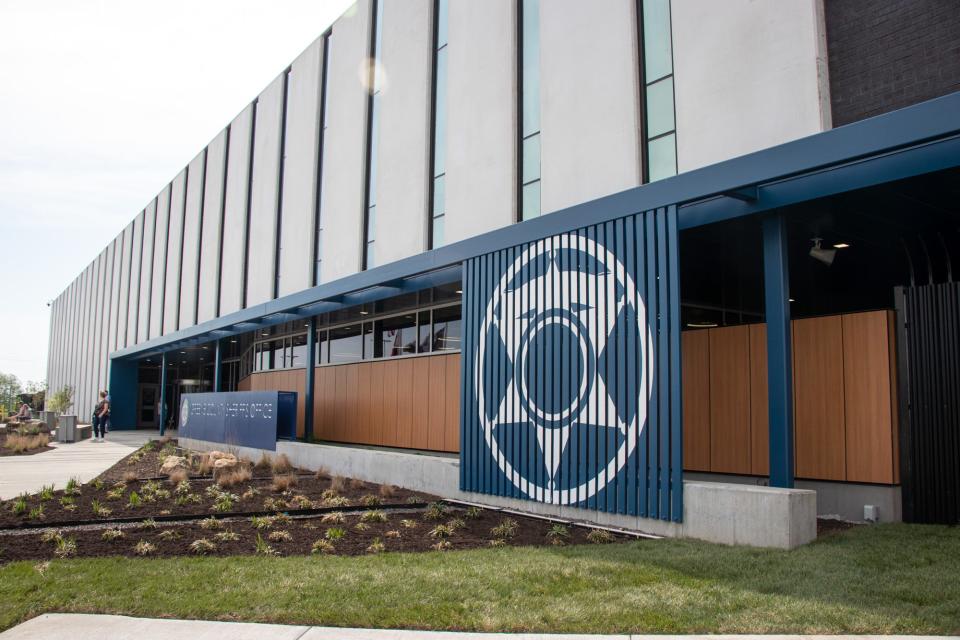
EPIC (Energy Production and Infrastructure Center) building.
Regarding mental health, UNC Charlotte has worked hard to provide services for its students to prevent a similar problem from happening here. That may not be enough.
In a field such as engineering, the ingrained acceptance of the intense struggle is something essential to survival. Through that perspective, instead of seeing a situation where one needs help, one may see those mental health struggles as something to deal with all the same.
Efforts to reach out and make visible overtures toward mental health support in the College of Engineering would be a major step forward.
“To be honest, I haven’t noticed too much effort [by the college to promote positive mental health] personally. This may just be because I don’t get out enough, though. I’m too busy studying,” fourth-year civil engineering student Jeff Murray said.
With busy workloads, access to mental health services provided by the Center for Counseling and Psychological Services (CAPS) can prove challenging to fit into one’s schedule. Times that are more accessible for individual counseling, such as on the weekends, may prove to be lifesaving for those who cannot afford to seek off-campus support or wait for openings with limited on-campus counseling.
Following in NC State’s footsteps, adding dedicated counselors to support engineering students and their needs would go a long way to give students the courage to seek help. More public efforts to create an environment that breaks down the silent sufferance of those struggles would eat away at the foundational obstacles to a better workspace and climate in engineering.
The circumstances that brought darkness to NC State are not unique to themselves. As Charlotte’s rising star continues to soar, the demand for greater excellence in its programs may push the bar further.
Acting now is even more important before tragedy strikes in the Queen City.