Do You Believe in Creation or Eternity?

The philosophers of Greece — such as Aristotle, Socrates, Plato and others — were devoted to the investigation of both natural and spiritual phenomena. In their schools of teaching they discoursed upon the world of nature as well as the supernatural world. Today the philosophy and logic of Aristotle are known throughout the world. Because they were interested in both natural and divine philosophy, furthering the development of the physical world of mankind as well as the intellectual, they rendered praiseworthy service to humanity. This was the reason of the triumph and survival of their teachings and principles. Man should continue both these lines of research and investigation so that all the human virtues, outer and inner, may become possible. – Abdu’l-Baha, The Promulgation of Universal Peace, p. 322.
OK, ready for some true profundity? Here’s one of humanity’s oldest and deepest questions: How do you think the universe came into being—or did it? Did an all-powerful Creator, or perhaps energy and matter themselves, bring the universe into existence at some specific point in time—or has it always existed? Depending on how you answer those questions, you’re either a “creationist” or an “eternalist.” Let’s examine this essential conundrum, and you can decide for yourself.
In classical philosophy, no debate between two positions has gone on as long as this argument for eternity.
One side of the debate, often called “Creationism ex nihilo,” argues that a Creator brought the entire universe into being ex nihilo, or from nothing.
The other side maintains that the universe has always eternally existed.
No scientific explanation, including the Big Bang Theory, has ever conclusively proven one position or another. Proponents of the Big Bang Theory, including Father Lemaître, the Catholic priest who first promulgated it in 1927, say that it fits the creationist model. Proponents of the eternalist theory say science has proven that something can never emerge from nothing, and that nature abhors a vacuum.
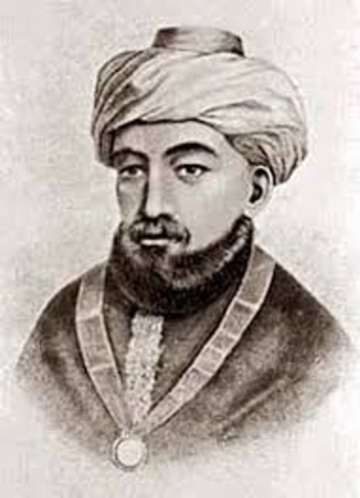
For the most part, the Creationism ex nihilo argument has come from traditional theologians and philosophers who believe in the existence of a God. Jewish, Christian and Islamic philosophers (with a few exceptions like the Muslim philosopher Averroes) and clergy have generally supported this position throughout history. They generally argue that God’s creation had to come into being at some point in time; and that before God’s creation, by definition, nothing existed except God. The revered Jewish theologian and philosopher Maimonides, probably the best known of the creationists, made strong arguments for this position, which he saw as Biblical in its absolute truth.
On the other side of the debate, the chief eternalist, the great Greek philosopher Aristotle, made several compelling scientific and philosophical arguments for eternity. He said “that generation should take place from nothing” was obviously impossible, since we know that matter comes, always, from a pre-existing cause or some other form of matter. He said that the very existence of motion in the universe means that things have always moved. He said that a complete vacuum is a natural impossibility, and therefore nothingness cannot exist, and has never existed.
Several Eastern religions—Hinduism, Buddhism, Jainism—also support the eternalist point of view, their scriptures pointing out that the universe has no beginning.
Kind of makes your head spin, doesn’t it? It sure does for me. I find it incredibly hard to conceive of a timeless universe without beginning or end, and I find it equally hard to imagine a complete void full of absolutely nothing. In fact, I can’t think of too many tougher questions than this one.
The Baha’i answer to this debate, then, might surprise you:
Know that it is one of the most abstruse questions of divinity that the world of existence—that is, this endless universe—has no beginning.
…Know that a lord without vassals cannot be imagined; a sovereign without subjects cannot exist; a teacher without pupils cannot be designated; a creator without a creation is impossible; a provider without those provided for is inconceivable—since all of the divine names and attributes call for the existence of created things. If we were to imagine a time when created things did not exist, it would be tantamount to denying the divinity of God.
Apart from this, absolute non-existence lacks the capacity to attain existence. If the universe were pure nothingness, existence could not have been realized. Thus, as that Essence of Oneness, or divine Being, is eternal and everlasting—that is, as it has neither beginning nor end—it follows that the world of existence, this endless universe, likewise has no beginning. To be sure, it is possible for some part of creation—one of the celestial globes—to be newly formed or to disintegrate, but the other countless globes would continue to exist and the world of existence itself would not be disrupted or destroyed. On the contrary, its existence is perpetual and unchanging. Now, as each globe has a beginning, it must inevitably have an end as well, since every composition, whether universal or particular, must of necessity be decomposed. At most, some disintegrate quickly and others slowly, but it is impossible for something that is composed not to ultimately decompose. – Abdu’l-Baha, Some Answered Questions, newly revised edition, pp. 207-208.
The existence of the universe, the Baha’i teachings clearly say, “is perpetual and unchanging.” However, Baha’u’llah wrote, all creation “is preceded by a cause:”
The one true God hath everlastingly existed, and will everlastingly continue to exist. His creation, likewise, hath had no beginning, and will have no end. All that is created, however, is preceded by a cause. This fact, in itself, establisheth, beyond the shadow of a doubt, the unity of the Creator. – Baha’u’llah, Gleanings from the Writings of Baha’u’llah, p. 161.
Could this answer give us a middle way between creationism and eternalism? What do you think?
Next: Seeking to Know the Secrets of the Universe

Source link