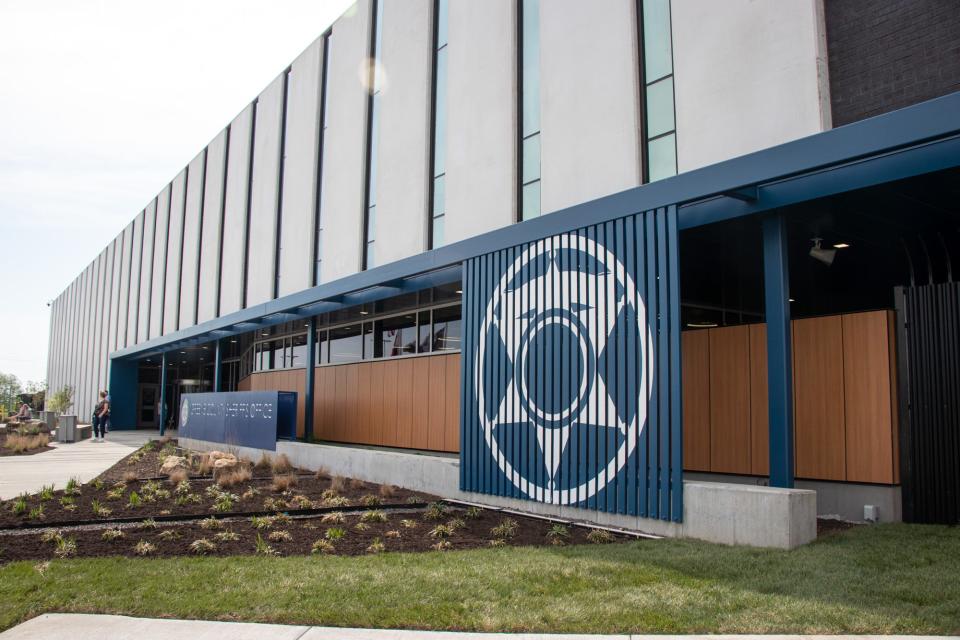


Wheeling Township Town Hall is located at 1616 N. Arlington Heights Road, Arlington Heights.
The initial levying of tax revenue for the new Wheeling Township 708 Mental Health Board is at risk after it was determined the wording of a November 2022 referendum question approved by voters was incomplete.
Several Wheeling Township taxpayers attended Wednesday’s (Aug. 9) mental health board meeting at the township hall in Arlington Heights, 1616 N. Arlington Heights Rd. New Wheeling 708 Board President Jack Vrett presided alongside board attorney Ken Florey, who has worked closely on the issue.
The November referendum establishing the 708 board, approved by 25,545 voters (51.97%), stipulates an average Wheeling Township home valued at $325,000 should pay an additional $28.36 a year, generating $1.5 million in revenue to fund mental health services through the board. However, levying the funds anytime soon is at risk because of “improper tax code language” in the referendum question, Florey said.
Residents who spoke mentioned personal experiences with loved ones dealing with depression, substance abuse, post traumatic stress disorder and how the mental health board would “provide resources beyond the township,” some said.
One resident said “the need is high, and the need is growing. The world is increasingly a scary place. The way we can make the world a less scary place is to do what we are doing tonight, come together as people and work through the community.”
Arlen Gould, long a proponent of establishing a 708 board in Wheeling Township, said the board’s commitment shows how crucial mental health is: “This has been a long haul to even get here tonight. We are disappointed, we have known that Wheeling Township has opposed this referendum from the beginning and this is a way they are trying to slow it down.”
Another referendum supporter, Lorri Grainawi, mentioned Wheeling Township and its role in mental health: “Not only are we concerned about this decision, but the lack of transparency around it. We feel the township’s decision violates the intent of the law.”
Residents believed the township had already decided on the tax levy, but Florey explained there were flaws in the referendum language. “Don’t blame the township,” he said. “The person who put the referendum wording together didn’t do it correctly… It is a transparency issue for taxpayers.”
The attorney said portions of the tax levy details were missing in the question presented to voters in November. “The language must tell what the tax levy is to approve the referendum,” Florey said, adding that the referendum question needs to provide specific tax levy information for voters to know further tax implications.
An issue for 708 board members was when the referendum issue was discovered. Florey said it occurred at some point this year, but did not disclose exactly when. The issue for board members then came down to transparency between them and Wheeling Township. Members mentioned that the township had possibly known of the issue before the 708 board’s July meeting, but kept it from them.
“The 708 board was blindsided by this issue last month,” Gould said.
One 708 board member, Jim Ruffatto, made his voice heard. “If it was discovered before…and for us to not find out about it is a lack of transparency. For us to get the notes in June, then supposed to be discussed in July…We are a separate taxing body with responsibility to our citizens so we can start funding our projects. We are going to continue on like we are proposing a levy next October.”
Florey said it could take some time for the levy be relooked at, mentioning if the 708 board’s current proposed tax levy is eliminated, they can form a new levy to vote on at the November 2024 general election. Even then, he mentioned it could take until 2026 for those tax levy funds to be dispersed.
“No one in this room right now will be able to resolve this issue of the levy,” Vrett said, stating there are two courses of action. One is to reconvene on creating a new levy, but, he hinted, it would be a tedious challenge. “Second is most responsible. We will do a strategic assessment, community assessment, we will continue to hear from members of the community so the moment we have authority we can go issue the levy… This is a fantastic opportunity to show we will work hard on this.”
Gould told Journal & Topics after the meeting, “there are more questions than answers. The community is worried and concerned and they know they absolutely need mental health funding. The longer it delays, the longer we can’t fund it.”
Support local news by subscribing to the Journal & Topics in print or online.