



The Mental Health Project is a Seattle Times initiative focused on covering mental and behavioral health issues. It is funded by Ballmer Group, a national organization focused on economic mobility for children and families. The Seattle Times maintains editorial control over work produced by this team.
I graduated summa cum laude from the University of California, Berkeley; participated as a Fulbright scholar; and completed coursework for a Ph.D. at UC Davis. But none of that was on my mind eight years ago, when I ran shrieking unadmitted into a hospital emergency room.
I was experiencing a psychotic break, though it had taken five years for the disintegration to finally land me in a mental hospital. Even though it was against my will at the time, I’m now grateful for my husband taking me to the hospital and for the state holding me inside once I got there because I was what is termed “gravely disabled”: I had stopped eating and drinking, and was unable to function.
The Seattle Times Mental Health Project features contributed essays from members of our community as part of our Mental Health Perspectives guest column. We invite individuals with personal stories related to mental health to share their experiences that reflect broader issues and concerns in the field. If you would like to inquire about submitting a column, please email mentalhealth@seattletimes.com.
On that day, hospital staff forced me into a room, instructing me to take off my clothes so they could put me in a straitjacket and inject an antipsychotic medication into my upper thigh. I fought them tooth and nail and had to be restrained. The next two weeks were a blur: I spent hours in community art time, met with psychiatrists and paced through halls. I couldn’t watch TV because I thought it was talking to me. I thought all the other patients were actors in a major plot to uncover “the fact” that I was a terrorist. (Of course, I’m not.) My Fulbright was in Russia, and I thought the U.S. government believed I had been turned into a terrorist during my stay.
The psychiatrist I worked with in the hospital wrote “lacks insight” on a notepad, a clinical phrase meaning the patient doesn’t know they are sick. I felt confused when I read that because I was working full-time as a teacher at that point, and my essays had always been called insightful when I was a student. I didn’t know it was a clinical phrase for the status of a person’s psychological health. When I learned that I was considered gravely disabled, it felt disempowering — and only years later did I see how true it was.
More Mental Health Perspectives guest columns
Until then, I thought insanity was something found on the streets or in the literature I had studied. I didn’t even know there was a mental hospital in Sacramento, and I hadn’t known anyone who had been hospitalized or who even took mental health medication.
Without insurance and a husband, I would undoubtedly have become homeless. Without friends with connections to the National Alliance on Mental Illness, I would have never been encouraged to always remain on mental health medication. I would have become a “frequent flyer” in the hospital emergency room.
I also want to recognize my race, as a white person, afforded me certain privileges. People of color who have mental illnesses like mine often deal with additional barriers like a lack of culturally competent health care providers, stigma and a disproportionate risk of police violence in crisis calls (for example, the shooting deaths of Black father Leonard Thomas in Fife and of pregnant Black mother of four Charleena Lyles in Seattle, both in the year 2017 and both while they were experiencing acute mental health crises at the time).
Over the four days of acute full psychosis that preceded my sprint through the closing ER doors, my husband attempted to shake me of my delusions. He pointed to the shirt he was wearing with the logo of our high school band, where we first met, and said, “I’ve known you since you were 15. The U.S. government didn’t even know you would go to Russia then, and I loved you before you lived abroad,” after I had accused him of marrying me because of government coercion. He didn’t realize that I was beyond reasoning.
Nothing makes me sadder than to think of his isolation during that time. Nothing makes me more grateful for having been forced to receive treatment.
I had no idea the mind could play tricks on you over five years of a descent into madness, like I experienced. Some people in my situation go their whole lives thinking they are suspected terrorists. Medication may also be able to prevent new delusions or significantly mute them. I was fortunate enough to be able to look back and see where I had lost contact with reality, starting with my paranoia about my research on child abuse and terror during graduate school.
It didn’t help that my husband is an aerospace engineer with secret clearance who was working on missile defense. Delusions often seem totally plausible, even though they are simultaneously ludicrous.
We’d like to hear from you.
The Mental Health Project team is listening. We’d like to know what questions you have about mental health and which stories you’d suggest we cover.
Get in touch with us at mentalhealth@seattletimes.com.
After my hospitalization, I stayed on a high dose of antipsychotic medication, a mood stabilizer and a low dose of an antidepressant. Suddenly, my delusions broke. Once I started feeling healthy, I became overwhelmed by the reality and extent of my psychological disability. It was paralyzing, mind-warping and all-consuming.
At the end of 2015, my husband and I decided we needed a change of scenery. My husband was recruited to a position in Kent at Blue Origin, and I finally got a good psychiatrist who diagnosed me with obsessive-compulsive disorder. He also encouraged me to continue taking antipsychotic medication. And in 2018, he shared with me that I have schizoaffective disorder — after years of that information being withheld. The diagnosis is sometimes not disclosed to patients because it’s believed the stigma and self-stigma can be disabling and suicide-inducing.
In addition to taking antipsychotic medication, I also stopped reading articles that triggered mental health concerns. I exercised more outside and I sought alternative therapies, including taking vitamin B12 supplements in high doses, that have been helpful in reducing my schizoaffective disorder symptoms of isolation from society.
When I first got to Washington, I was a language learning specialist for Highline Public Schools and later a Spanish teacher at Evergreen High School. I ended up leaving midyear due to my anhedonia, a clinical term that refers to the inability to experience pleasure. I had lost all love of teaching and couldn’t sequence learning events.
Nothing was more awful than falling from prestige and accolades to hospitalization, gaining tons of weight — due to the antipsychotics — and losing my teaching career.
But it ended up being a blessing. The medicine saved my marriage, and stopping teaching gave me time to actually heal since I’d never gotten fully off what I call the “success treadmill” after my hospitalizations. I started working on efforts around racial justice, LGBTQ+ inclusion and women in leadership, which gave me deep purpose.
Nowadays, my husband and I live in Burien, where I run a strengths-based mentorship program for young people to find purpose, which I see as a tool to help mental health.
I got a life coach and came up with the concept that my life mission was “to facilitate wellness and contribution.” I wrote and self-published a book in 2020, which was then taken up by a publisher in 2023.
I still have days where I struggle, but no matter what, I still have purpose in my life. Supporting others, spirituality, and my commitment to always taking mental health medication is what keeps me going on hard days.
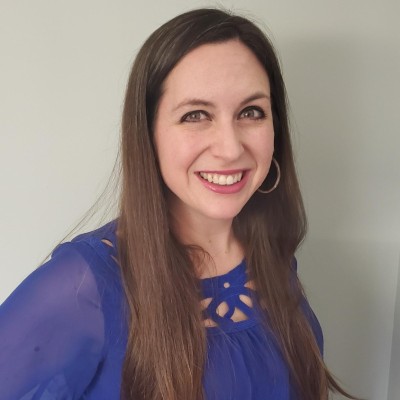
Erin Grimm is CEO of Seahurst Wellness and Education Center, and she lives in Burien with her husband, Todd, and cat, Costco. She is author of a book on supporting persons with serious mental illness, “Emergent Grace,“ and a Christian memoir, “What I Remember of the Little I Understand.” She blogs at emergentgrace.com about suffering, hope and progressive Christianity. Her next book, “The Nine Principles of Hope,” is expected to publish in mid-2024.